

Our story
It all started in 2016, with an apple tree in our garden.
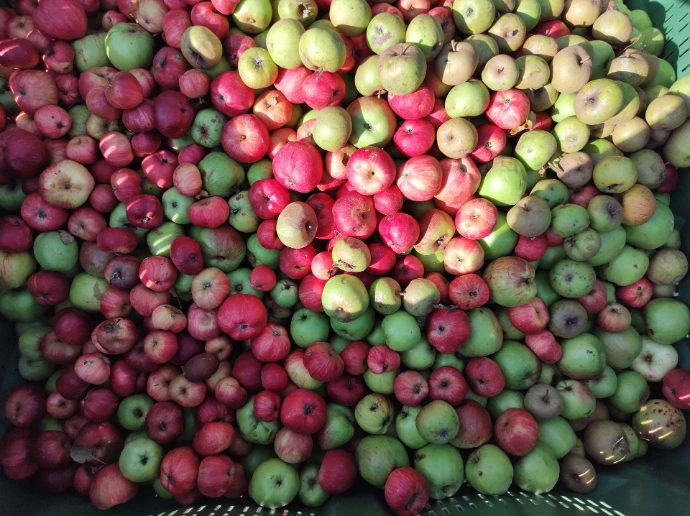
We couldn't bear to see our apples rotting on the ground and set out to find a solution. Making applesauce? Or just apple juice? Nice, for sure! But that contains a lot of quick sugars, which is not ideal for someone with diabetes – Rutger in this case.
Still, we are both true bon vivants who enjoy good food and drink. Melanie loves experimenting with all kinds of fermentations. Rutger has been fascinated for years by everything related to beer and wine, especially dry and sour beer styles like saison, oud bruin, and geuze: drinks with character and little to no residual sugar. From that shared passion, the idea to make our own dry cider was born.
Actually, cider, or "apple wine", has never really found a place in our regions like it has in France or England. In the past, some farms did make cider from old apple and pear varieties, but it usually remained for personal use and rarely made its way to the shop.
We found that a shame.
That's why we searched for old farms, high-stem orchards, and gardens where forgotten fruit varieties still grow. We want to appreciate that beautiful fruit again and make something delicious from it.
Soon we noticed how exciting it was to taste the results of the harvest year after year. That motivated us to keep searching for more fruit and to experiment with new flavours. In addition to apples and pears, we also work with, among others, currants, blackcurrants, hops, and grapes.
This way we get to the most beautiful places nearby and meet people who enthusiastically let us pick. Often it concerns an abundance of fruit that would otherwise go to waste. We find that special, especially in a country with so many orchards, while the shop shelves mainly contain imported fruit.
Belgium has a rich beer culture, but there is hardly a real cider culture. We would like to change that.
That is why we consciously choose local fruit, artisanal production and spontaneous fermentation. We do not add yeasts that influence the taste, but let the wild yeasts that are naturally present on the fruit do their work. This requires patience and trust, but results in ciders with character, complexity and their own story.
We work with what nature gives us.
Every harvest is different. The weather, the bloom, the available fruit varieties and the orchards also determine how our cider tastes. Therefore, no vintage is identical. Just like with wine, each bottle tells the story of one harvest, one season and the nature that has shaped it.
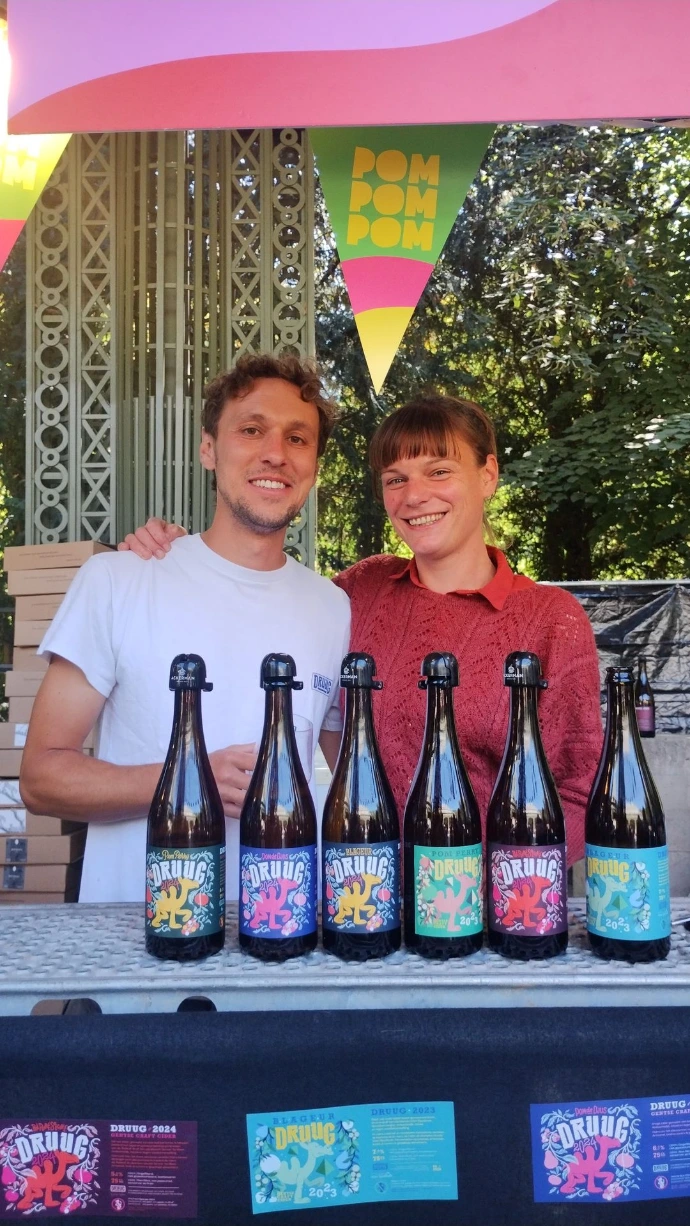
With DRUUG we want to show how much beauty grows in our own region. By revaluing local fruit and old varieties, we give fruit that would otherwise go to waste a second life. In this way, we hope to gradually contribute to a Belgian cider culture, where craftsmanship, nature and enjoyment come together in every bottle.
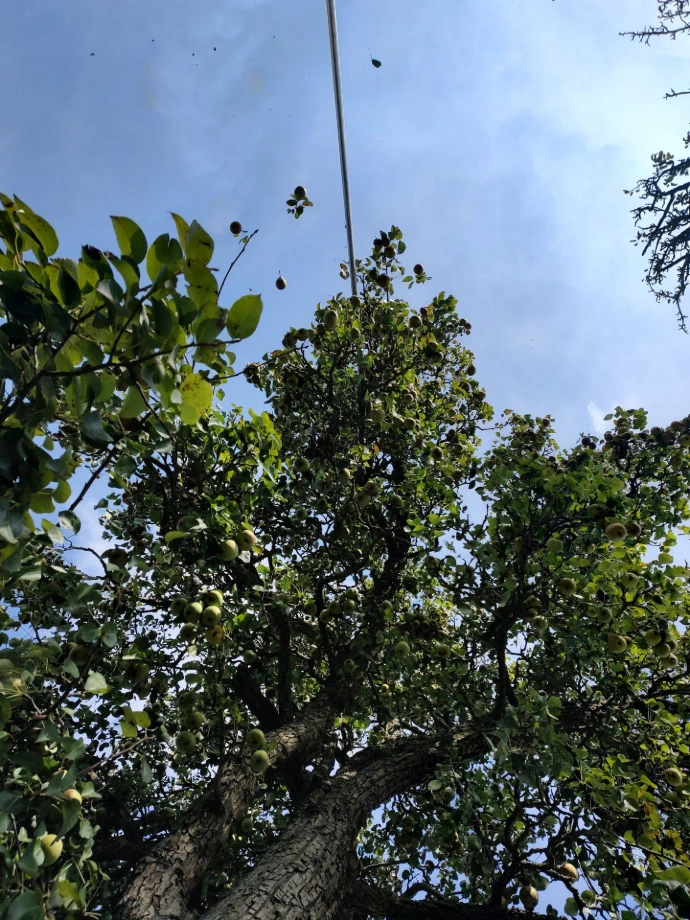
Do you have an orchard and hate to see all that fruit go to waste?
We are particularly interested in high-stem orchards, but some half-stem varieties can also be interesting. Additionally, we can work with special fruit types such as ornamental pear, ornamental apple, quince, and other fruits like cherries and plums.
Do you have fruit that you would like to give a second life? Then send us a message below with a clear description. We would be happy to come by to see what is possible.